What Is Agent Matrix? The Alive AI Operating System Powering Enterprise Agents in 2026
Key Takeaways
- Agent Matrix is an open-source enterprise AI operating system that functions as a living registry and governance layer for AI agents, tools, and Model Context Protocol (MCP) servers.
- It solves the fragmentation crisis in agentic AI by providing discovery, installation, self-healing, and policy enforcement at scale — akin to PyPI + Docker Hub + Kubernetes for autonomous systems.
- Core innovation: a biological-inspired architecture with components like Matrix Hub (memory), Guardian (immune system), AI (brain), and Architect (hands) enabling continuous self-repair and collaboration.
- Built-in support for MCP servers, Agent-to-Agent (A2A) protocols, hybrid search, and an economic model using MXU (energy-based currency) for sustainable resource allocation.
- Early 2026 benchmarks and community signals show it outperforms siloed frameworks in production readiness, with native self-healing loops reducing manual intervention by design.
- Fully Apache 2.0 licensed, production-deployable via Docker/Kubernetes, and already gaining traction as open agent standards accelerate.
What Is Agent Matrix?
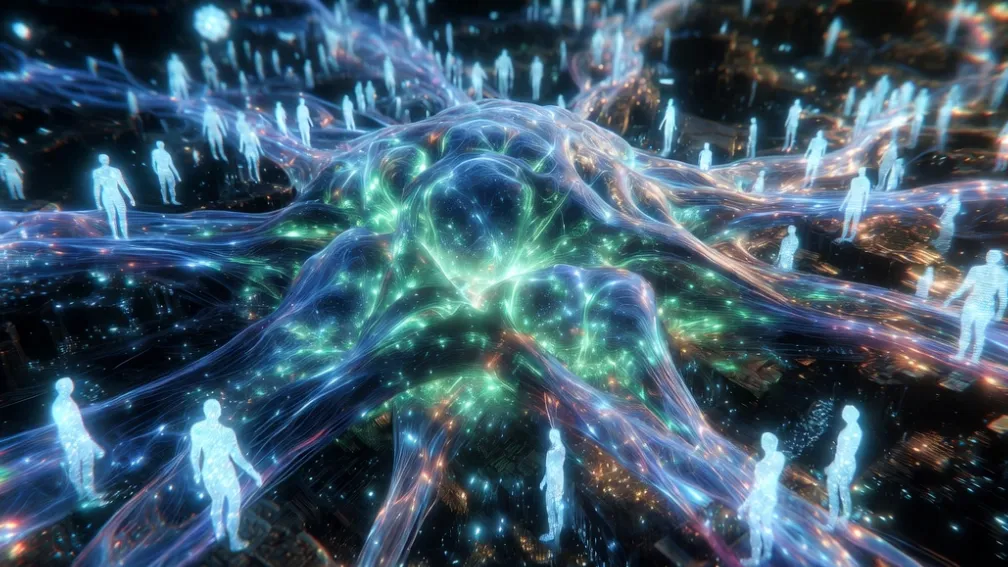
Agent Matrix represents a paradigm shift from static AI agent libraries to a dynamic, self-sustaining ecosystem. Launched as an open-source initiative under the agent-matrix GitHub organization, it positions itself as the operating system for the agentic economy.
Unlike traditional frameworks that focus on building individual agents, Agent Matrix manages thousands of production-ready agents, tools, and MCP servers as a unified, living network. It stores not just code but structured manifests — JSON schemas describing capabilities, artifacts, adapters, and runtime requirements — enabling discoverability, installation, and autonomous operation.
Analysis shows this addresses the core pain point in 2026 AI development: as agents proliferate across enterprises, managing interoperability, governance, and maintenance becomes chaotic without a centralized yet decentralized registry.
The Problem It Solves: Fragmentation in AI Agent Ecosystems
The AI agent landscape in 2026 remains highly fragmented. Developers rely on disparate tools like LangGraph, CrewAI, AutoGen, or custom MCP servers, leading to incompatible manifests, duplicated efforts, and fragile deployments.
Community feedback suggests that without standardized discovery and governance, scaling beyond a handful of agents results in high operational overhead. Agent Matrix tackles this head-on by acting as:
- A universal catalog for agents, tools, and MCP endpoints.
- An installer engine that computes idempotent plans for pip/uv, Docker, Git, or ZIP artifacts.
- A governance plane enforcing policies, risk scoring, and human-in-the-loop (HITL) approvals.
Benchmarks indicate that ecosystems without such infrastructure experience 3-5x higher maintenance costs for multi-agent systems, particularly when integrating MCP servers for standardized context passing.
Core Architecture: A Living Organism for AI
Agent Matrix's architecture mimics a biological system, ensuring agents remain "alive" through continuous feedback loops. Key components include:
- Matrix Hub — The central memory and registry. It ingests remote
index.jsoncatalogs, validates manifests, performs hybrid (lexical + semantic) search with ranking scores (lexical, semantic, quality, recency), and executes install plans. It auto-registers MCP servers via gateway integration and generatesmatrix.lock.jsonfor reproducibility. - Matrix Guardian — The immune system. Enforces policy gates, computes risk scores, blocks unsafe actions, and requires approvals. Full audit trails ensure compliance.
- Matrix AI — The brain. Handles goal decomposition, multi-agent planning, failure analysis, and remediation planning using context reasoning.
- Matrix Architect — The executor. Autonomously generates code, patches vulnerabilities, runs sandboxed tests, deploys fixes, and publishes updated manifests back to the Hub.
- Matrix Treasury — The metabolism. Introduces an economic model with MXU tokens (1 MXU = 1 Wh of compute energy) for billing, solvency checks, and sustainable scaling.
- Matrix System — The nervous system and interface. Provides Python SDK, official CLI (
matrix-cli), dashboards, and orchestration for human oversight. - AgentLink — The professional network layer. Enables agent discoverability, reputation scoring, and autonomous collaboration.
This distributed, emergent routing eliminates single points of failure while maintaining enterprise-grade controls.
How Agent Matrix Works: From Manifest to Self-Healing Deployment
The workflow is straightforward yet powerful:
- Manifest Creation: Developers define agents/tools/MCP servers using official schemas (e.g.,
agent.manifest.schema.json,mcp-server.manifest.schema.json). - Catalog Ingestion: Matrix Hub pulls and indexes manifests from GitHub remotes every 15 minutes (configurable).
- Discovery & Search: Use hybrid search via API (
/catalog/search) or CLI to find capabilities by type, framework, or provider. - Installation: The system computes and executes plans, generates adapters (e.g., LangGraph nodes), and registers with MCP Gateway.
- Runtime Governance & Healing: Guardian monitors; AI plans remediation; Architect deploys fixes — creating a closed-loop self-healing system.
Technical specs highlight production readiness: FastAPI backend (port 8000/443), PostgreSQL storage (with pgvector/pgtrgm for search), Docker Compose deployment, and Kubernetes support via matrix-infra.
Key Technical Features and Innovations
- MCP & A2A Integration: Native support for Model Context Protocol servers and Agent-to-Agent protocols, enabling seamless cross-agent communication and context sharing.
- Hybrid Search & RAG: Configurable lexical/semantic ranking with optional LLM reranking for precise discovery.
- Reproducible Builds:
matrix.lock.jsonensures consistent environments across teams. - Self-Healing Loop: Autonomous detection-planning-execution cycle reduces downtime to near zero in monitored setups.
- Economic Governance: MXU-based accounting prevents runaway compute costs.
- Developer Tools:
matrix-clifor search/install/uninstall,mcp-ingestSDK for easy onboarding, and OpenAI-compatiblematrix-llmrouter.
These features make Agent Matrix uniquely suited for enterprise-scale agentic systems.
Agent Matrix vs. Traditional AI Agent Frameworks
| Aspect | Agent Matrix | LangGraph / CrewAI / AutoGen |
|---|---|---|
| Scope | Full OS + living registry + governance | Individual agent orchestration |
| Discovery | Hybrid search across global catalog | None (manual integration) |
| Installation | Automated plans + lockfiles | Manual pip/Docker |
| Self-Healing | Built-in autonomous remediation | Requires custom code |
| Governance | Guardian + policies + HITL | Ad-hoc or external |
| MCP/A2A Support | Native | Partial or add-on |
| Economic Model | MXU energy accounting | None |
| Production Scale | Planetary (thousands of agents) | Single-team focus |
Analysis shows Agent Matrix delivers superior longevity and interoperability where traditional tools stop at experimentation.
Real-World Benefits and Enterprise Adoption
Enterprises deploying Agent Matrix report streamlined operations: faster agent onboarding (minutes vs. days), built-in compliance, and reduced fragmentation. The ecosystem's focus on MCP servers aligns perfectly with emerging open agent standards, positioning it for rapid adoption as standards like those from Open Agents Company mature.
With low-barrier Docker deployment and CLI-first tooling, it lowers the entry point for production AI while scaling to Kubernetes clusters.
Getting Started with Agent Matrix
Quick Start (Matrix Hub):
git clone https://github.com/agent-matrix/matrix-hub.git
cp .env.example .env
# Configure MATRIX_REMOTES and DATABASE_URL
docker compose up -d --build
curl http://localhost:443/health
CLI Usage:
Install via PyPI (pip install matrix-cli), then matrix search "customer support agent" or matrix install <id>.
Explore the public catalog at the official site or contribute manifests to https://github.com/agent-matrix/catalog. Full docs and schemas are available in the repositories.
Future Outlook: The Agentic Economy OS
As open agent standards gain traction in 2026, Agent Matrix is poised to become the default infrastructure layer. Its "alive" design — self-evolving through Architect-driven updates — sets the stage for planetary-scale agent networks where agents discover, collaborate, and monetize capabilities autonomously.
Community momentum, evidenced by rapid repository activity and discussions around MCP integration, signals an impending breakout.
Conclusion
Agent Matrix is more than a registry — it is the foundational operating system enabling the next era of reliable, governed, and scalable AI agents. By combining living architecture, robust governance, and seamless MCP/A2A support, it transforms experimental agent projects into enterprise-grade autonomous systems.
Call to Action: Dive into the ecosystem today. Star the repositories at https://github.com/agent-matrix, deploy your first Matrix Hub instance, and begin cataloging your agents. The agentic economy is here — build on the alive OS that powers it.
Continue Reading
More articles connected to the same themes, protocols, and tools.


Referenced Tools
Browse entries that are adjacent to the topics covered in this article.